The husband (AKA Eric) and I went to the UK for our niece’s wedding. She is an interesting musician type, who, at that time, lived on a longboat (also known as a canal boat) that is 75 feet long with 7 foot interior width. She lived on this pencil-like boat with her soon-to-be husband and their two Lurcher dogs. I don’t think we have this breed (?) in the USA. They are essentially greyhound mixes, I think, that are large, extremely muscular, fast, and not particularly friendly. When I said big, I mean like German Shepard sized but rather than a fluffy coat, they have short tight hair that shows off their very overly muscled bodies. Imagine Rocky Balboa or Arnold Schwartzenegger as a dog covered in half inch hair – canine terminators.
So living on what essentially is a hallway divided into tiny rooms, the four of them bunched together in the living room, think 7 X 8, on a small padded bench – kind of a 2X4 creation with paisley covered padding and a variety of pillows, kind of what you’d expect to see at an AT hostel. Plus, being in the UK, Birmingham to be exact, they had a tiny coal stove, tiny to the point that a thru hiker would call it a UL stove, that is used to warmup the interior of the longboat. Even in the summer, it was cold, dark, and damp. I did not see how it could possibly be warm in the bedrooms.
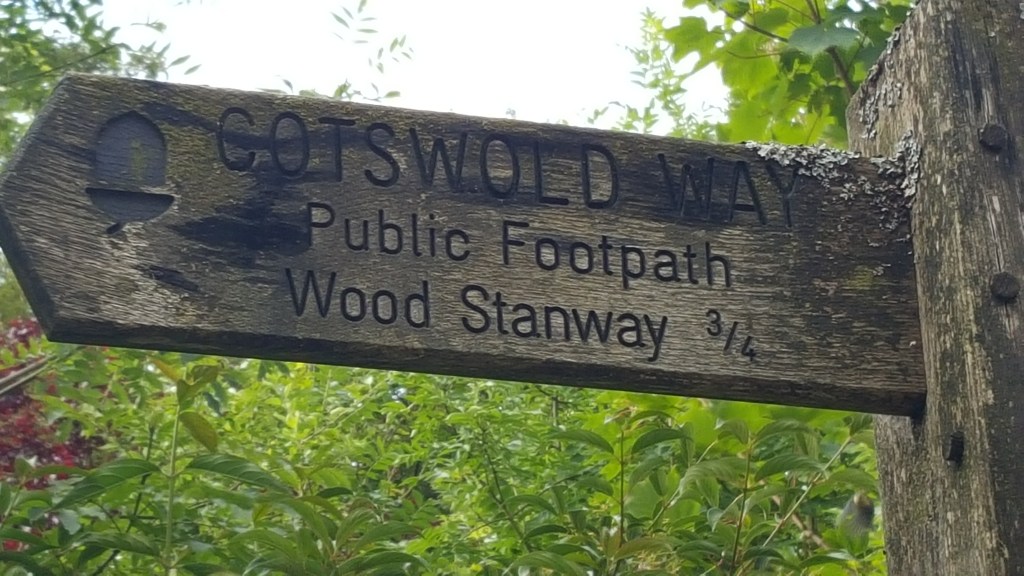
We were excited for the wedding and thought that we’d double dip on our trip to the UK by doing a hiking trip on the Cotswold Way, a hiking trail of just over 100 miles that goes through one of the most beautiful English regions that sports some spectacular golden limestone houses, a few giant manor houses, and the Cotswold Way. We quickly learned that almost all of the houses had been bought up by wealthy Londoners, bankers and CEO types.
If you are thinking of simple little homes, think again. This is historically one of the UK’s most wealthy areas going back centuries. Today many of the homes serve as second or third or whatever number of houses the very rich need. The houses are renovated to beyond their former glory – the yellow oolitic Jurassic limestone power washed and repointed, the gardens amazingly tended to, and everything in full British tiptop shape.
It almost felt like Disney has designed it, it was so perfectly perfect, perhaps a bit too much, but beautiful, quaint, and charming.
So here is the funny part. Due to some loophole in the law, if these houses are used for commerce, apparently to any degree more or less, they get a tax break or some reduced mortgage rate or something. The soon-to-be nephew explained it all to me which I promptly forgot. So, in this land of the newly and untitled rich, much more Mr. and Ms. than Lord and Lady, there is basically a battle (not) royal between houses on who can host the best B&B. Often there is one room or maybe two for guests that they fill with hikers a few days a month or whatever meets the requirement. The breakfast parts of the B&Bs were amazing – fresh pastries, French press coffee, tea, jams, jellies, eggs cooked to order, and often a small sack to take for lunch. The rooms were often filled with antiques.
Wait, we are hiker trash who arrive stinking like you do after a day of hiking, staying in luxury for very little money. I am liking this.
I asked one woman how many hours were spent maintaining her garden. Well, the Swedish woman comes 3 days a week to tend to the annuals and perennials, the Polish man comes 2, or 3, days a week for the shrubs and trees, and she, herself, puts in about 8 to 10 hours a week or at least she claims she does. “So it is basically a full-time job,” I asked. Actually it was close to 60 hours a week she informed me with a slight bit of irritation. I was not sure if she was annoyed by my brash American lack of manners to ask about work and the help or if she was insulted by my underestimation of how much time it took to maintain the various white, red, purple, and pink flowerbeds and the various shrubs and flowering trees that all were perfect, without a leaf out of place. Even the rumpled English style flowerbeds were perfect in their very well planned disorganization.
So, this was supposed to be about the Cotswold Way, not the B&Bs that I could not help but constantly compare to the Appalachian Trail shelters, my Big Agnes tent, and AT hostels I had stayed in . Needless to say the Cotswold inns were, to go local, posh, while the AT hostels are, well, rustic but, honestly, much more comfortable at least from an emotional aspect. With that said, nobody ever picked me up to shuttle me to a hostel in a Bentley, and I could see myself growing fond of this treatment that was actually at a bargain price (I thinking major tax write offs here).
The Cotswold Way is 101.9 miles although you’ll do a lot more walking as your explore the villages, stop for food at a pub, and explore the Cotswold region. The trail is essentially flat or mildly rolling hills so not very challenging but very pleasant. The countryside is beautiful farmland and dotted with small villages that seem to be more 17th Century than 21st Century. We actually planned our trip to last 10 days to enjoy the historic sites and villages along the way. If I had to do it over, I might have planned for 7 or 8 days as one medieval village with a disproportionally large church in the center quickly blends into the next. In a nation that has one of the lowest church attendance rates on Earth, I wondered who pays to maintain all these aging churches, some pushing 1000 years, until I started to notice the very sad state of disrepair many of them are in.
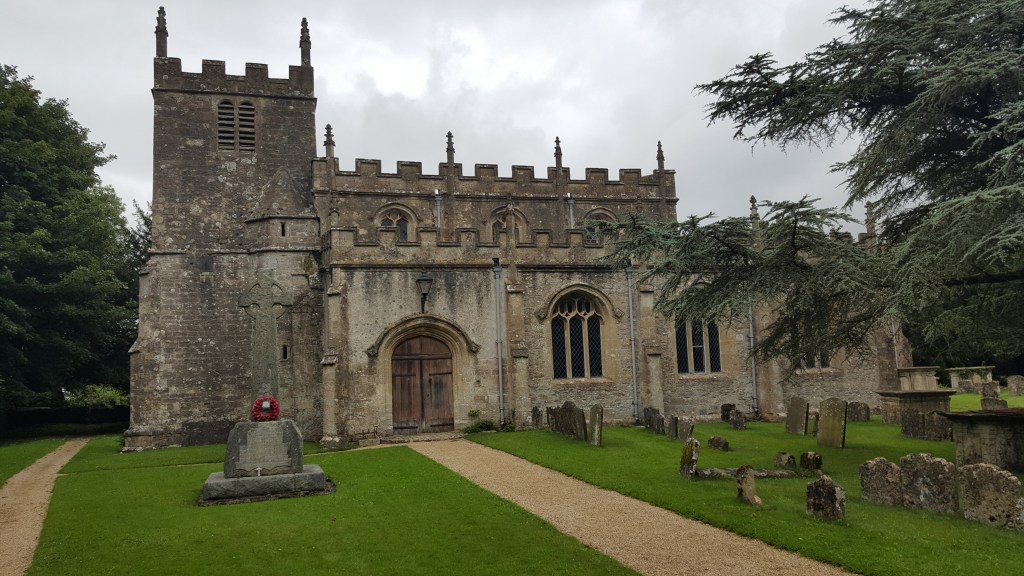
If I had to do it over, I would have visited more pubs and less churches. The locals, often not the same as the moneyed B&B/estate owners, are very friendly and fun.
The hiking trail goes mainly next to or even through the middle of agricultural fields – wheat, oats, and sheep. Lots and lots and lots of sheep which is what made this such a rich area to begin with. The trail even crosses the Dyson estate of the vacuum cleaner and other expensive household appliances tycoon that made him one of the UK’s richest people. That estate is hundreds or even a thousand acres of, yes, sheep and sheep and one giant house. Beyond verdant fields of grain and grazing pasture, you really do have the opportunity to see all the historic villages, churches, ancient burial mounds, and a lot more. Getting an English Heritage Pass will save you a lot of money. Carrying a clean pair of shoes will gain you entry once you’ve shown your pass.
The UK is not know for great weather but rather wet weather. So, theJuly wedding that prompted this trip mostly gave us good weather…warm, not hot, or what could be called idel most days. The Brits probably thought it was hot but when you are from Arizona, you define hot in a very different way than they do. So the weather was really pleasant until the temperatures dropped about 20 degrees and the rain came down like The Flood. The cute indentations that were the trail going through farms turned into an inch of water covering a few inches of mud. Our shoes and pants were covered in mud and we were stinky from wearing rain coasts. The wind made the rain an almost horizontal affair. We we soaked head to toe and hungry.
Sunday roast is an English tradition. You go to the pub and eat really really well done roast beef and potatoes all covered with very gelatinous brownish gravy. It all tends to be very bland and grey and, as mentioned, gelatinous. Well, after a full morning of slugging through the mud, we pulled into town soaking wet and stinking like backpackers who had been wearing GoreTex jackets all day. We went to a pub and asked if they had food. So, when people tell you the Brits are cold or unfriendly, remember this. The very kind lady let us into the pub despite our odor, our muddy boots, and our dripping clothes and packs, rearranged the reservations and table assignments and gave us the best she coudl do – 45 minutes to order, eat, pay, and leave. I wanted to hug her.
We feasted on the greatest meal ever – traditional British Sunday roast.
 Tripping Along The Trail