
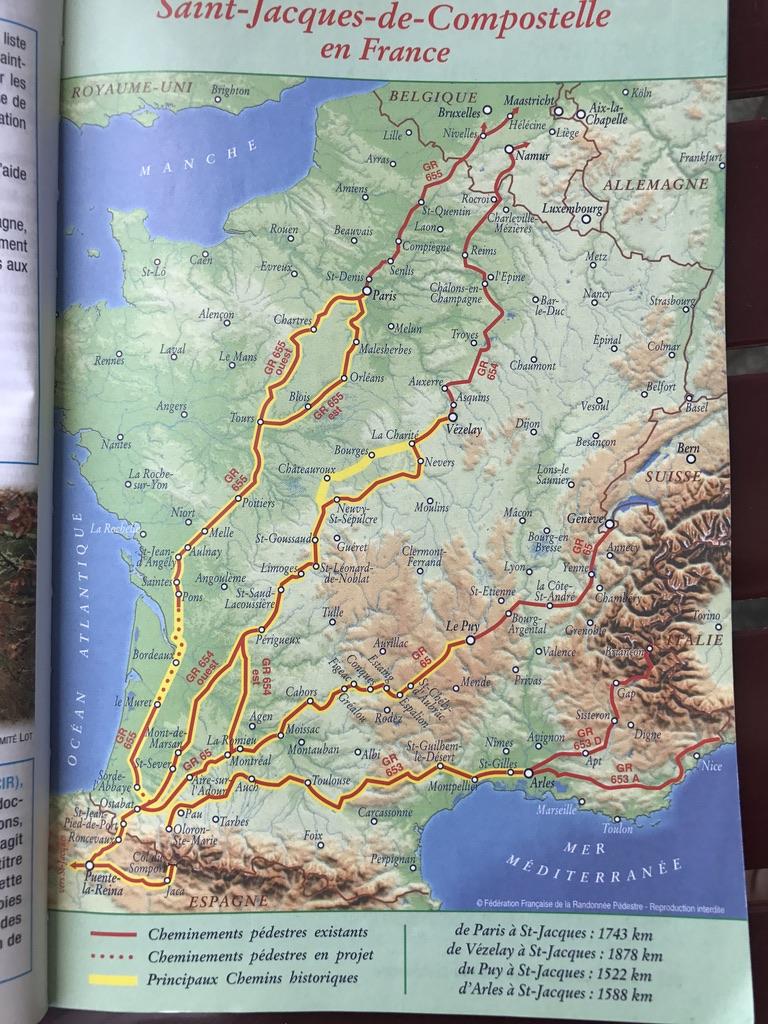
In my theory, hiking, AKA pilgrimages, were a major way to get out of some small village and get to go on an adventure. Although there was plenty of motivation to go on pilgrimages in the Middle Ages, the plague being the leading cause, there is evidence that there actually was a adventure aspect to to hiking from France or The Netherlands to the coast of Spain. There were many such sites throughout Europe and people tended to leave town to win favor with God, and, very likely, to just leave town. Seriously, what backpacker cannot relate?
So Le Chemin de Compostelle and El Camino were paths, remember that France has 4 Le Chemins de Compostelle and there are others in different countries including several in Spain, that eventually ended at the Cathedral de Santiago de Compostela (https://catedraldesantiago.es/en/cathedral/). The cathredal was built in the 11th Century after the bones of St. James were miraculously discovered buried in a field. St. James was an apostle who lived in the time of Christ, so, if you buy the story, were 1000 years old when there were found. A legend that developed that, by the short version, that St. James came to Spain in a boat made of stone. Anyway, the local bishop declared the found human bones to be those of St. James and, perhaps seeing a future here, built a cathedral to show off the bones.
St. James was really the go to saint for the plague in the Middle Ages. Le Chemin and El Camino had hundreds of shrines and churches devoted to St. James. Many still stand and are popular stopping places for hikers and modern religious pilgrims alike. However, before you put all your eggs in the St. James basket, you need to know about the saint for my birthday (August 16th) who gave St. James a run for his money.
St. Roch (or Rocco in Italian) was born in Montpellier in what is now the southern part of France. He, himself, was a bit of a hiker and wanderer, which pleased his middle class family none. He was kind of a St. Francis type who was far too vocal about the church and European society being greedy and not following Christian principles of charity, honesty, love, etc. Nobody likes a pious know-it-all that makes everyone uncomfortable about living the good life, right?
Well, St. Roch gets the plague and that is when his stock goes way up. Unlike almost everyone he lived through the plague but did so because his trusty hiking companion, his dog, brought him food every day to survive (not sure how the dog got the brie and baguette but it did). Clearly it was a miracle but not enough to keep him from being thrown in prison for being a general pain-in-the-ass and party pooper when he got back home to Montpellier. He died in prison.
After the death of St. Roch, he quickly replaced St. James as the go to saint for plague cures. Many of the shrines tossed the St. James statues away and put up St. Rock who is almost alway shown with his dog and showing a lot of leg to display his plague wound.
So St. Roch is quite timely for 2020. He is the patron saint for infectious diseases, prisoners, and dogs.
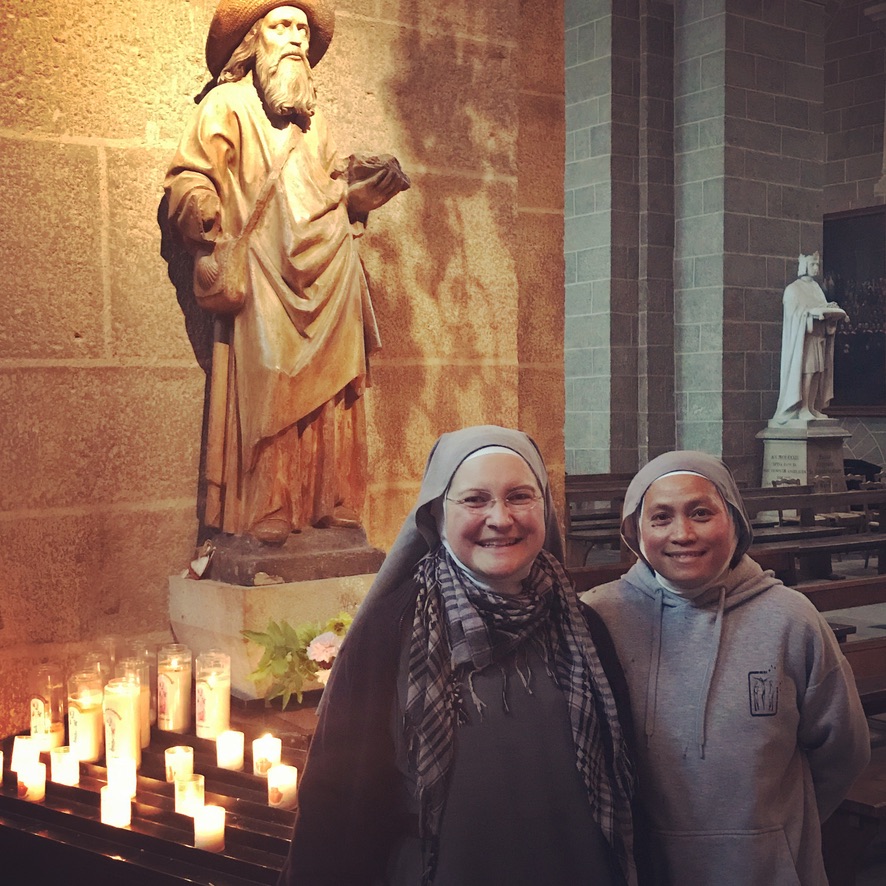
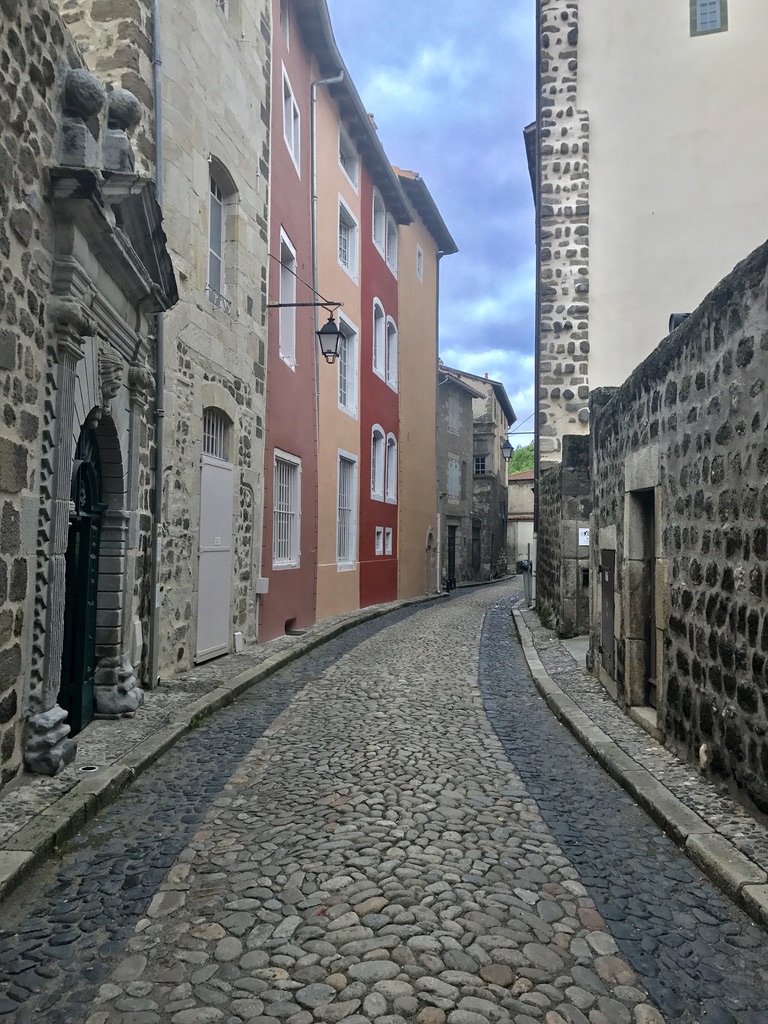
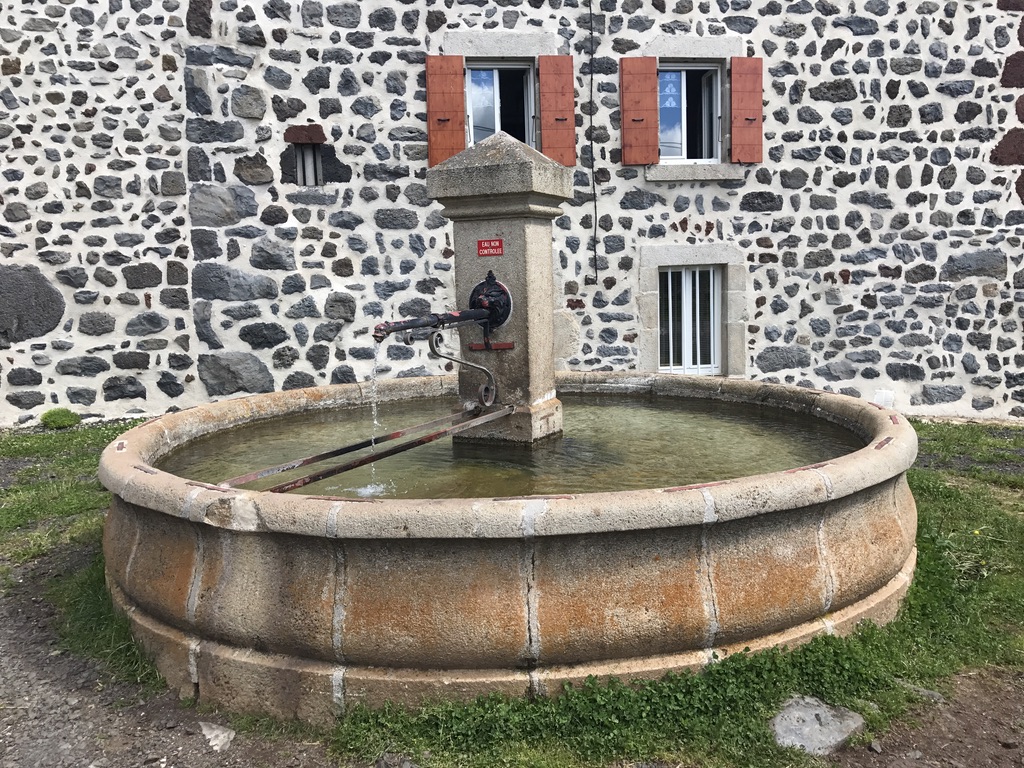
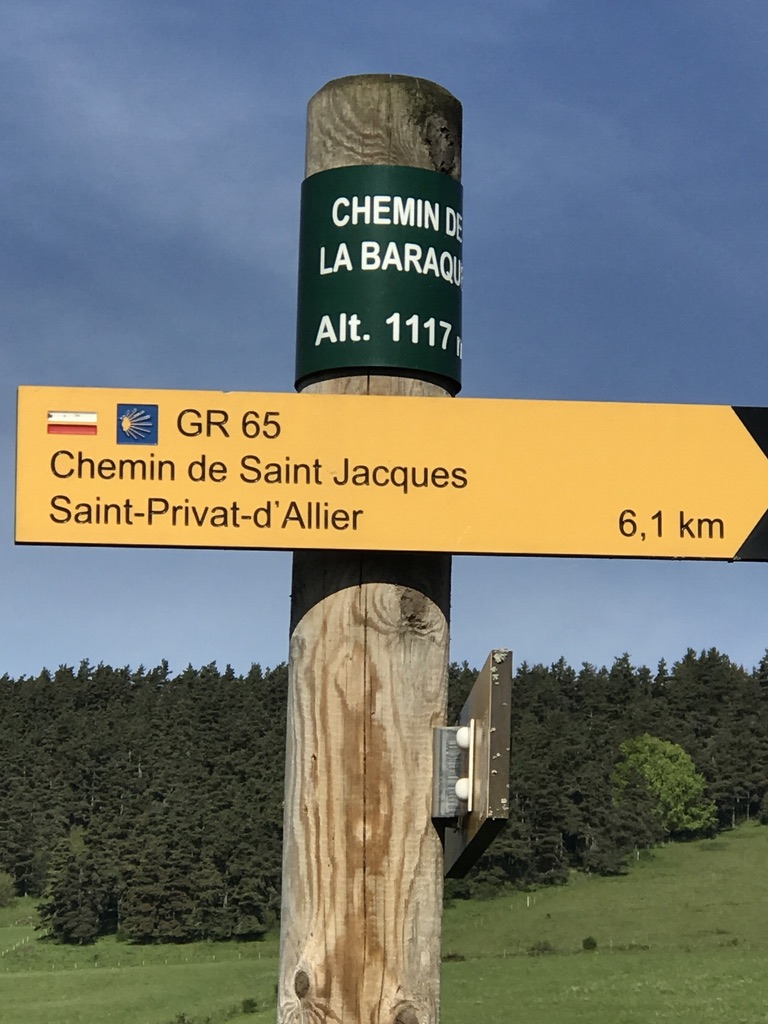
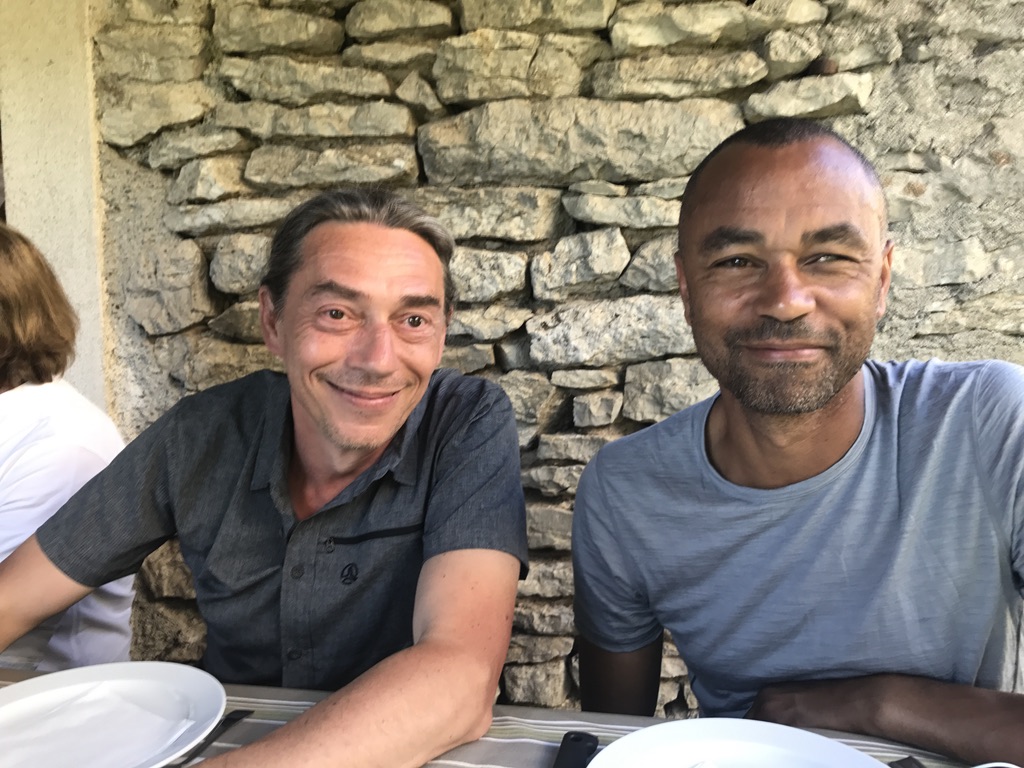
Here are some pics from Le Chemin and Montpellier, the home of St. Roch.





 Tripping Along The Trail