I am a bit of a paradox - a guy who claims I’d rather sleep in a tent than a bed but lives in a high-rise with my husband and our 16 pound dog, Louie. Confused and non-traditional Christian, cyclist, gay man, long distance backpacker, brother to those without homes, a bit cynical while being overly optimistic at times.
In my theory, hiking, AKA pilgrimages, were a major way to get out of some small village and get to go on an adventure. Although there was plenty of motivation to go on pilgrimages in the Middle Ages, the plague being the leading cause, there is evidence that there actually was a adventure aspect to to hiking from France or The Netherlands to the coast of Spain. There were many such sites throughout Europe and people tended to leave town to win favor with God, and, very likely, to just leave town. Seriously, what backpacker cannot relate?
So Le Chemin de Compostelle and El Camino were paths, remember that France has 4 Le Chemins de Compostelle and there are others in different countries including several in Spain, that eventually ended at the Cathedral de Santiago de Compostela (https://catedraldesantiago.es/en/cathedral/). The cathredal was built in the 11th Century after the bones of St. James were miraculously discovered buried in a field. St. James was an apostle who lived in the time of Christ, so, if you buy the story, were 1000 years old when there were found. A legend that developed that, by the short version, that St. James came to Spain in a boat made of stone. Anyway, the local bishop declared the found human bones to be those of St. James and, perhaps seeing a future here, built a cathedral to show off the bones.
St. James was really the go to saint for the plague in the Middle Ages. Le Chemin and El Camino had hundreds of shrines and churches devoted to St. James. Many still stand and are popular stopping places for hikers and modern religious pilgrims alike. However, before you put all your eggs in the St. James basket, you need to know about the saint for my birthday (August 16th) who gave St. James a run for his money.
St. Roch (or Rocco in Italian) was born in Montpellier in what is now the southern part of France. He, himself, was a bit of a hiker and wanderer, which pleased his middle class family none. He was kind of a St. Francis type who was far too vocal about the church and European society being greedy and not following Christian principles of charity, honesty, love, etc. Nobody likes a pious know-it-all that makes everyone uncomfortable about living the good life, right?
Well, St. Roch gets the plague and that is when his stock goes way up. Unlike almost everyone he lived through the plague but did so because his trusty hiking companion, his dog, brought him food every day to survive (not sure how the dog got the brie and baguette but it did). Clearly it was a miracle but not enough to keep him from being thrown in prison for being a general pain-in-the-ass and party pooper when he got back home to Montpellier. He died in prison.
After the death of St. Roch, he quickly replaced St. James as the go to saint for plague cures. Many of the shrines tossed the St. James statues away and put up St. Rock who is almost alway shown with his dog and showing a lot of leg to display his plague wound.
So St. Roch is quite timely for 2020. He is the patron saint for infectious diseases, prisoners, and dogs.
Here are some pics from Le Chemin and Montpellier, the home of St. Roch.
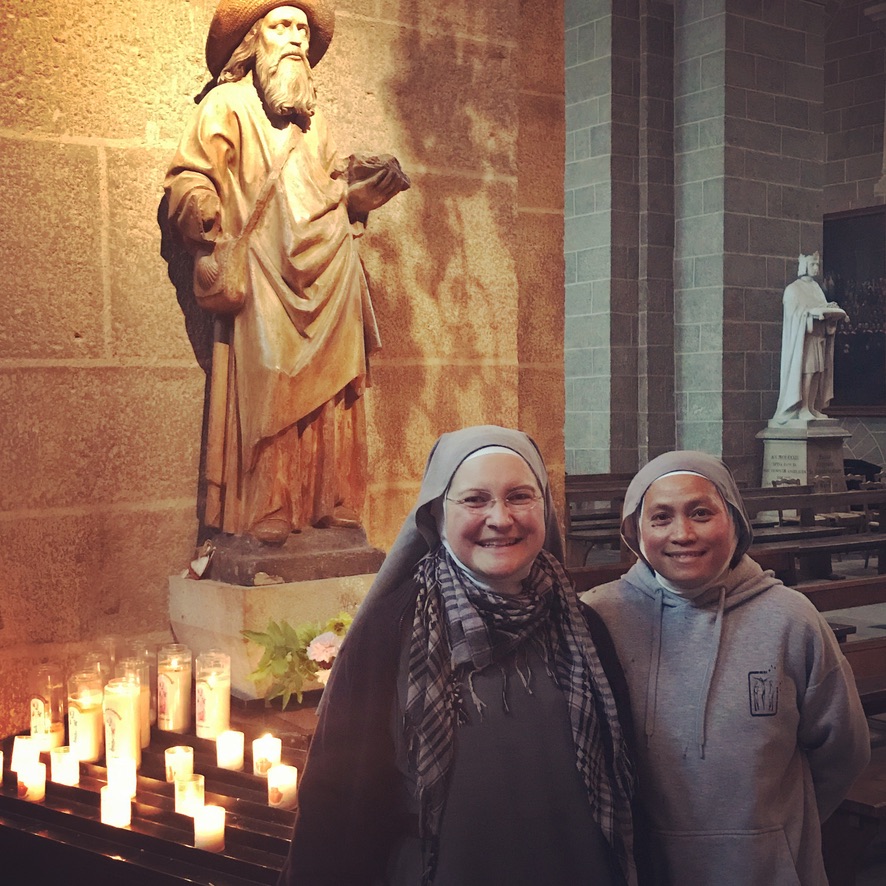
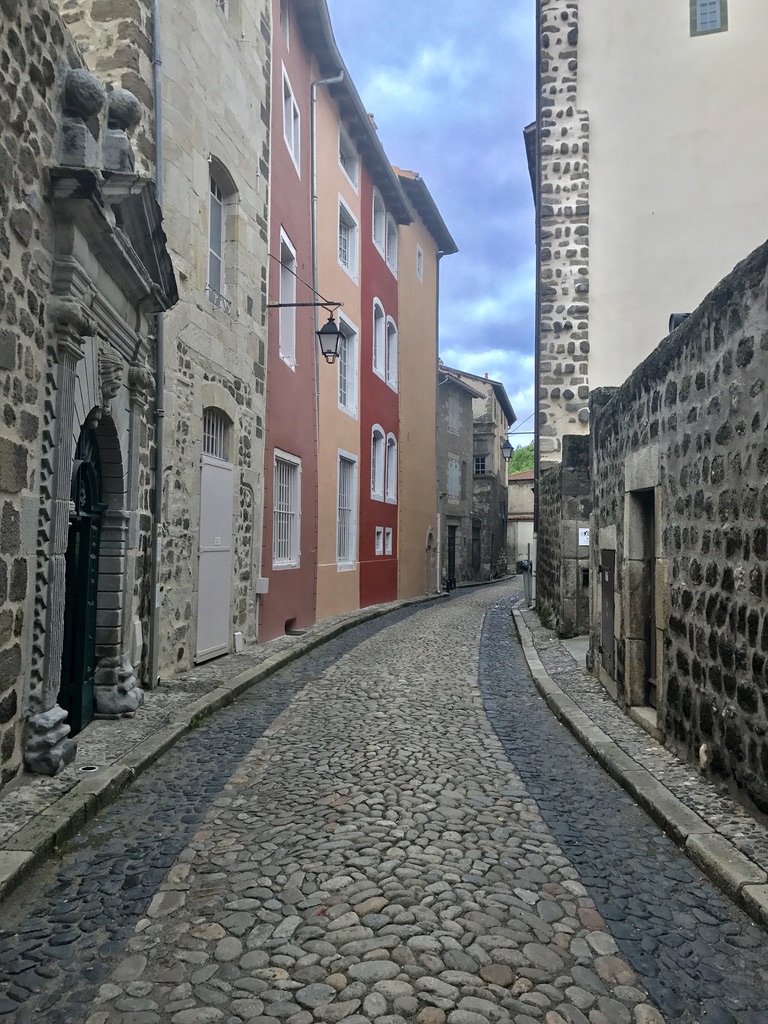
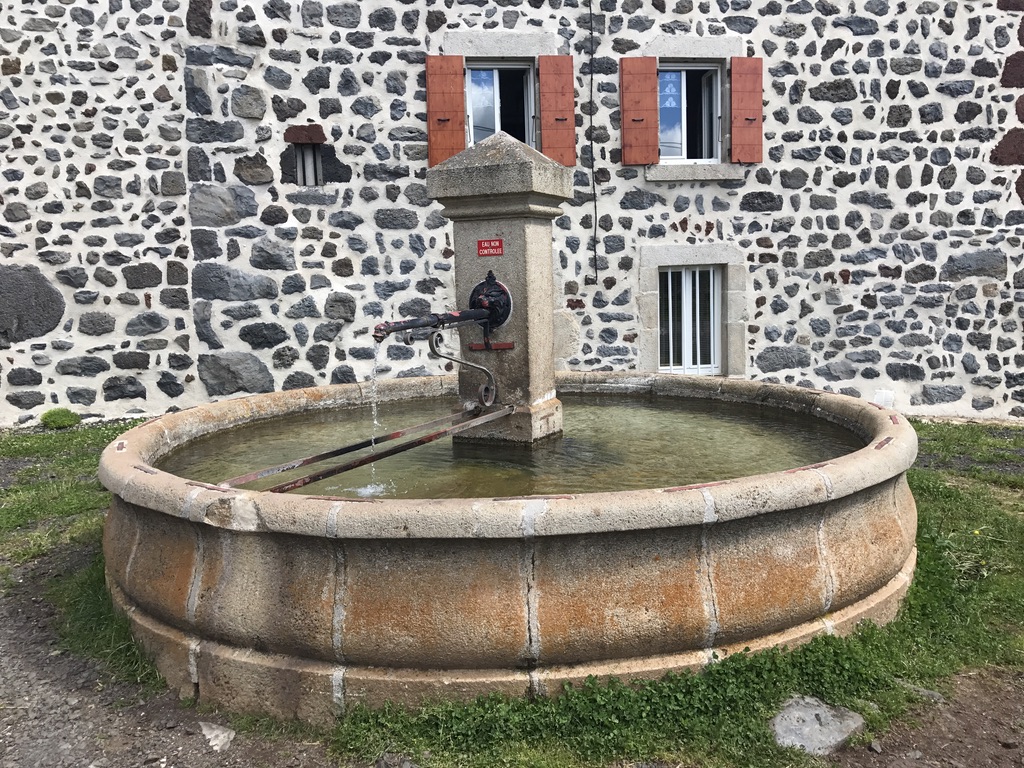
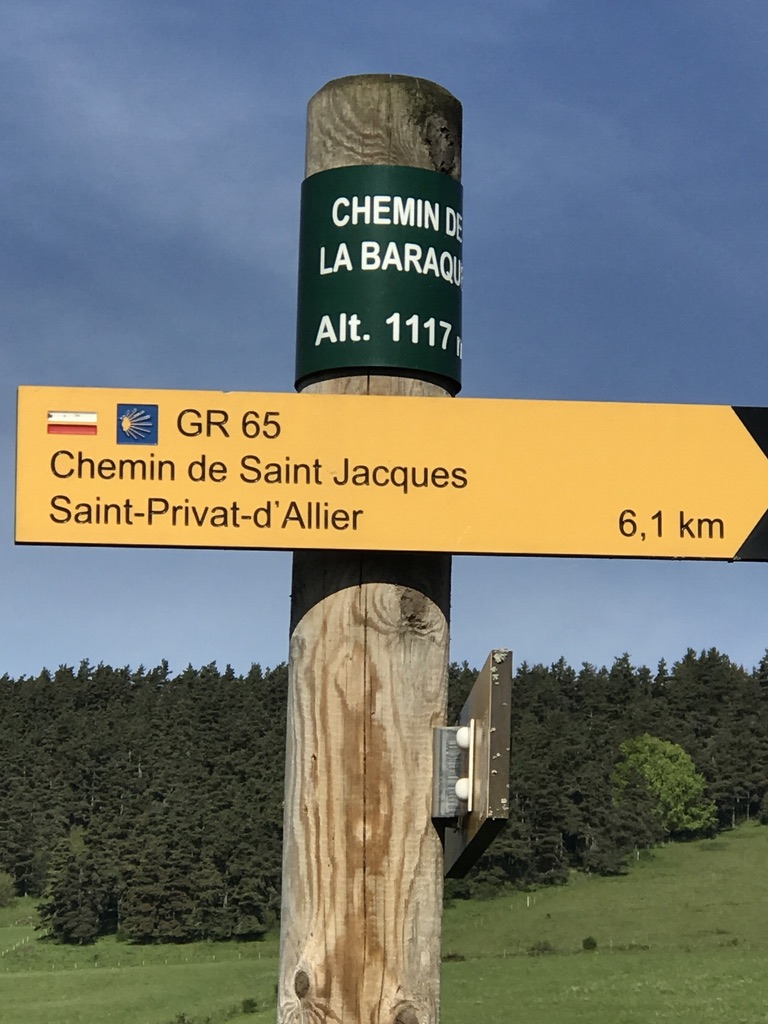
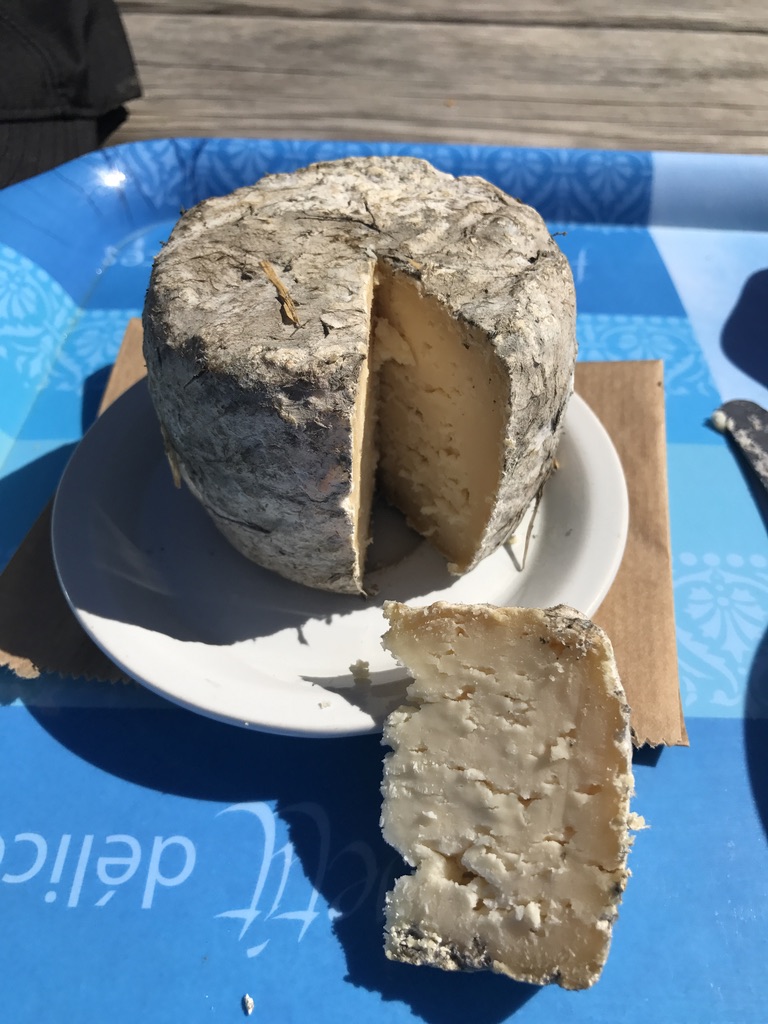
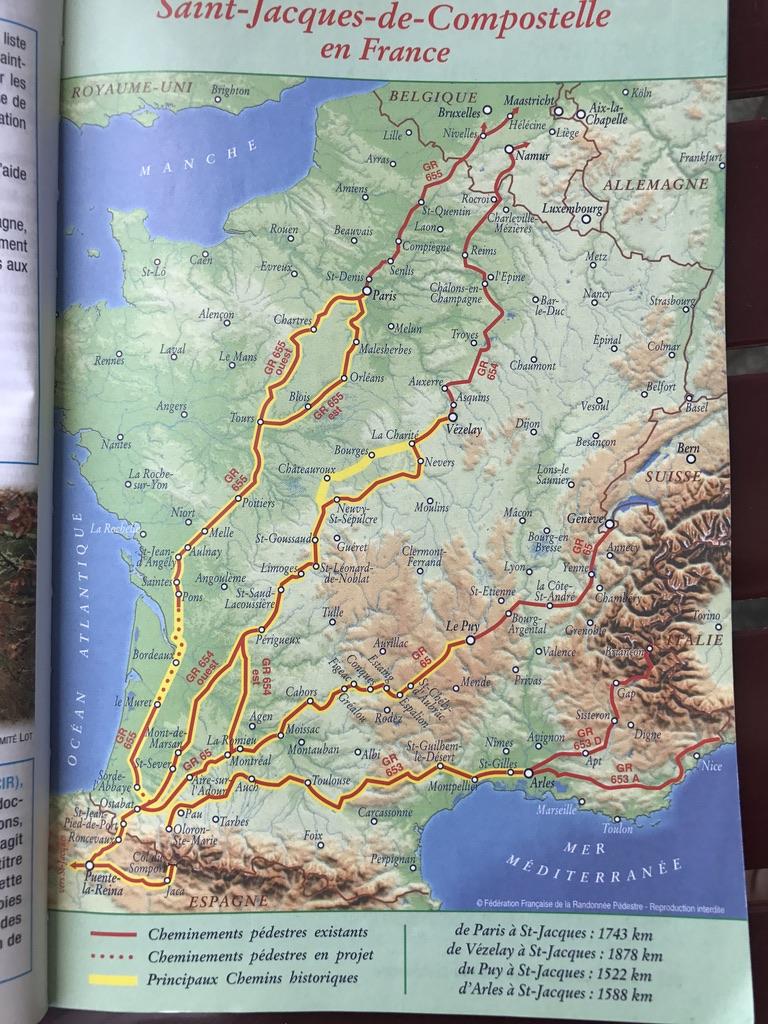
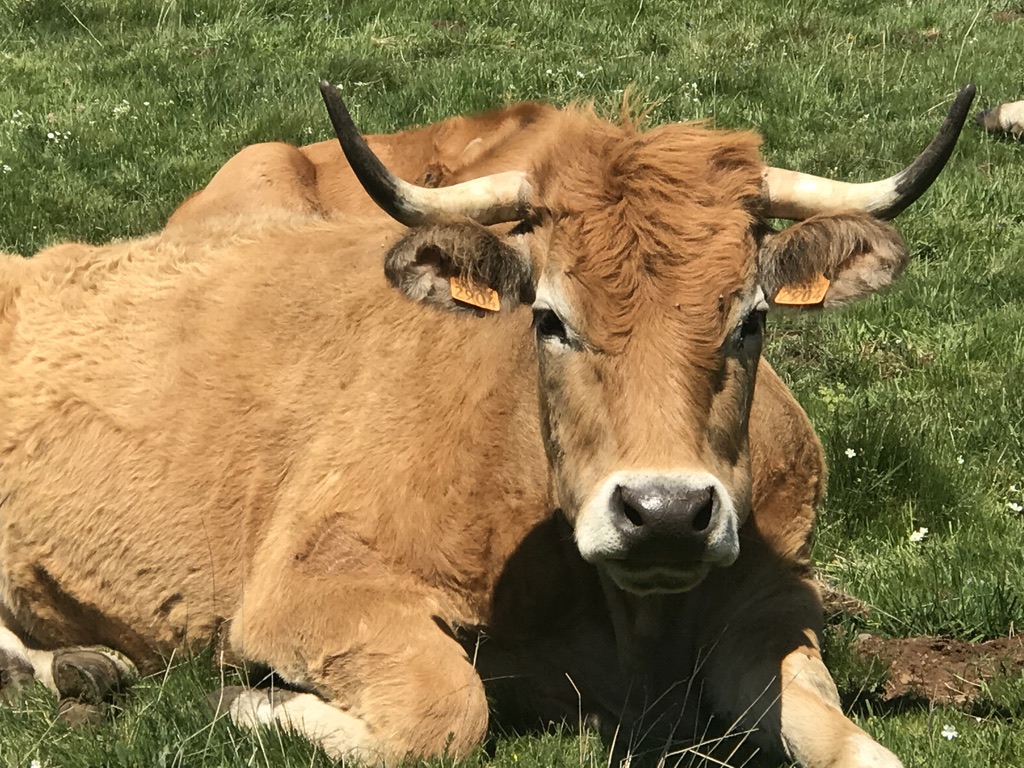
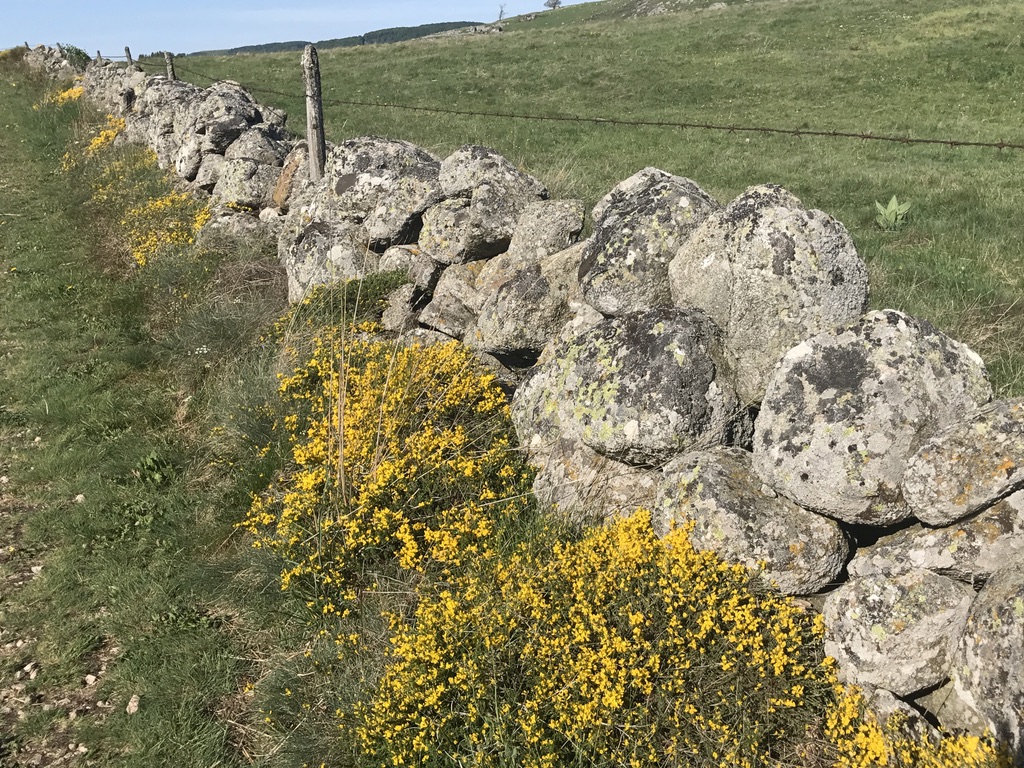
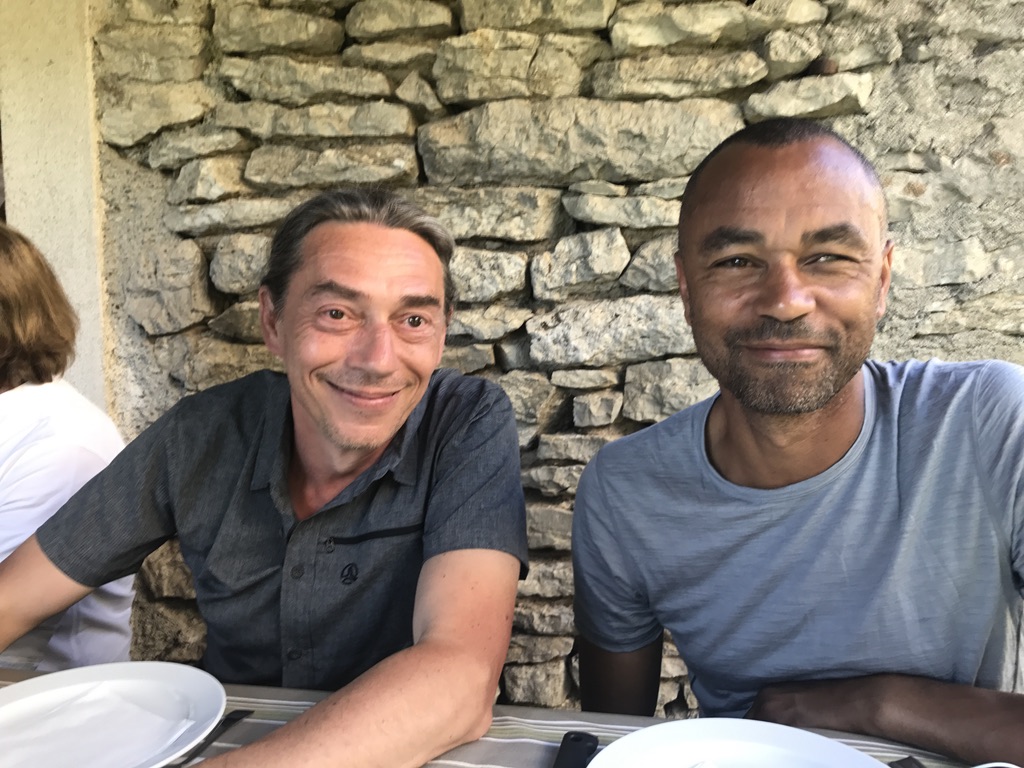
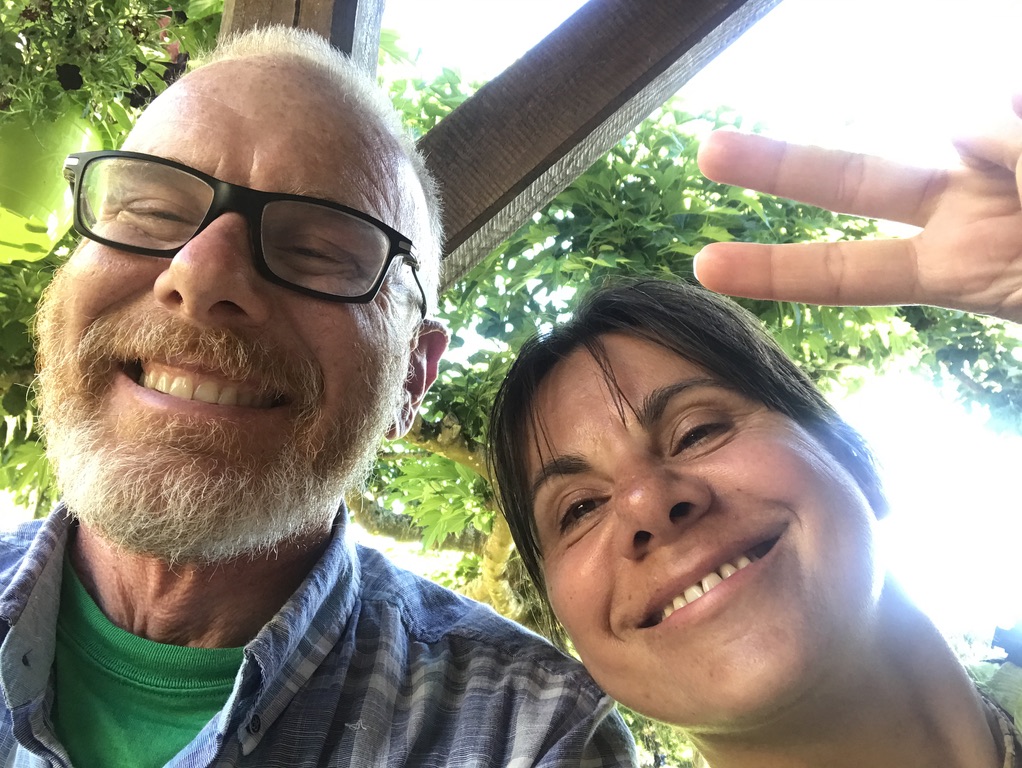
Two nuns and a statue of St. James in the cathedral where hikers get blessed every morning at Mass by the local bishop in Le Puy-en-Valey.The start of Le Chemin from the Le Puy cathedral, a traditional starting point for hikers in France. Some people start the path in Germany or The Netherlands and typically section hike it all the way to Spain although I did meet a few young hikers, all doing solo thru hikes.A fountain (AKA water source) in a small French village. In reality, you pass though small villages with stores multiple times a day. I never carried more than 500cc of water.This is an intersection of two hiking trails. The French government is very good at marking their network of hiking trails and it is easy to find maps and guides in bookstores. Note the traditional Le Chemin/El Camino symbol of a scallop shell. Many hikers attach scallop shells to their packs.Food: I was served this cheese for a few dollars. It was made on the daily farm which had a small restaurant for hikers. It think a cafe au lait and cheese with some bread was about $5 or $6. Note the strands of straw still attached to the cheese from when it was aged on a bed of straw…very traditional French cheese that tasted fantastic.A map of the various hiking trails that all lead to Saint-Jean-Pied-de-Port where the El Camino starts in France on the Spanish Border. I hiked on the most popular trial from Le Puy (3rd major trail moving across the page from the upper left to lower right. The other trails are less popular have have significantly less hiker friendly services. The trail along the south that goes to Italy is the most physically challenging and the one that provides for the most camping opportunities. A nation known for its cheeses has to have a lot of cows. They were a daily event and were oblivious to hikers even the bulls.The Au Brac region is a UNESCO World Heritage Sites. The soil is so rocky that modern farming equipment cannot be uses which has saved ancient stone walls and preserves pastures that are fill with wildflowers in the spring and summer. It is an amazing place even for Europeans who are used to very old buildings. Cheese market in Saint Chély-d’Aubrac.2 guys from my Le Chemin trail family. We hiked together for a few weeks. The man on the left is from along the Swiss border and the guy on the right is from the Britany, the most northwestern region in France. They spoke little English and I speak limited French but we all managed to have a great time together and talk nonstop day after day.The other member of our trail family. That idea is not really a concept in France. We just started haning out a dinner one night and stayed together. She is married to the guy in the picture above with the grey shirt.
The great thing about early retirement and subsequent participation in the gig economy is my ability to head out on trips with very little planning. I’d had planned to hike the AT in 2020 as a flip flop thru hiker. I was going to start at Harpers Ferry and leave after the Flip Flop Festival. But COVID ruined all of that.
So as 2020 dragged on, I started getting bored with bicycling. A friend who was a member of my 5 person COVID pod and an avid hiker was laid off, again COVID, so I suggested that we do a section hike from Standing Bear NOBO toward Virginia.
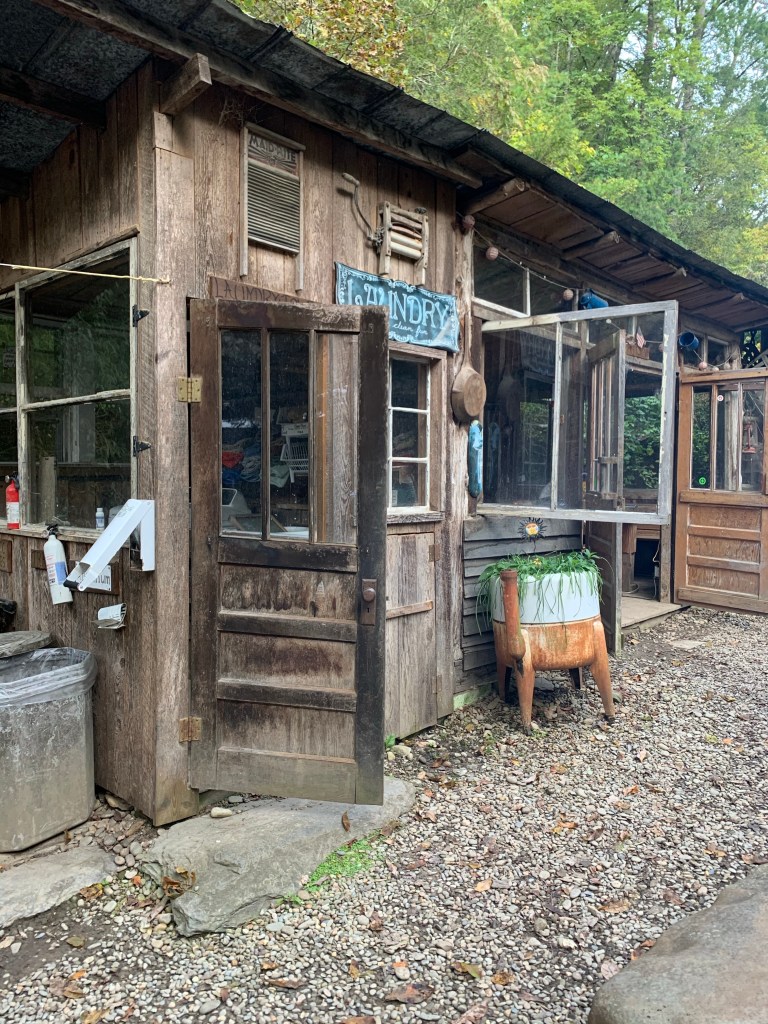
Hiker kitchen at Standing Bear
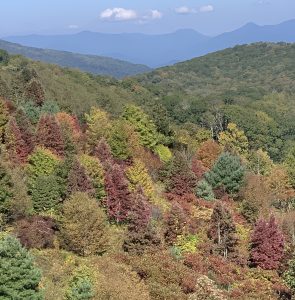
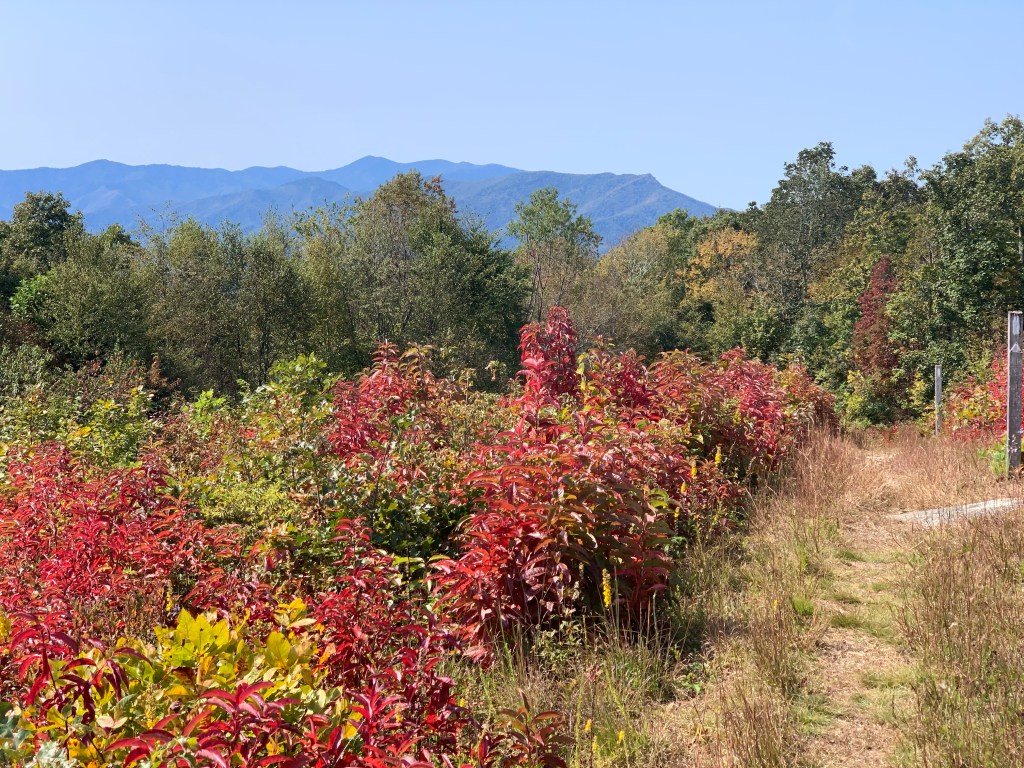
Our trip was amazing. The weather was perfect and this section of the AT along the NC-AT border is beautiful. Add fall leaves for a spectacular hike.
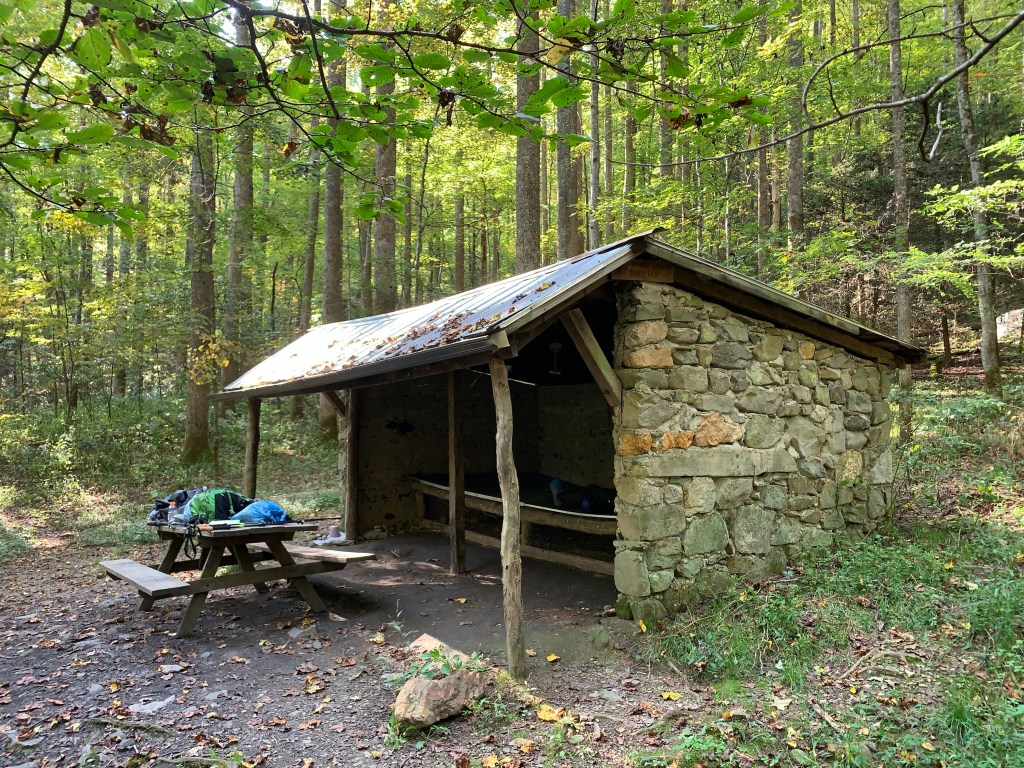
We flew to Knoxville and get shuttled to Standing Bear. The next morning we take off on a fairly short hike to Groundhog Creek shelter. Guthook had a warning that there were aggressive bears I thought, ‘what are the odds?’ Well, it seems they were 100% because 4 bears, two mamas and two cubs terrorized the shelter from 10 PM until 4 AM after taking a stove and pot that two guys, first cousins, left in the shelter picnic table. The other campers took turns standing guard. Honestly I’m not sure what they were guarding but they stayed up all night.
Groundhog Creek Shelter
I missed all of it. I have a cochlear implant which I take off at night. I did hear some vague commotion. I thought it was either bears or local teenagers with a case of beer. Figuring there was little I could do in either situation, I put my totally deaf ear up, my other ear against my clothing stuff sack I use for a pillow and went back to sleep. I had a peaceful night and slept soundly.
My friend actually had a bear push its nose into the side of his tent and then growl a bit. This was his first night ever on the AT and second night sleeping in a tent ever. It was quite a transition from day hiker to backpacker. He actually seemed less freaked out about it than I might have guessed. As it turned out, he is a natural for backpacker and could quickly tell the difference between ZPacks and BA as effortlessly as he’d taking to pooping in the woods.
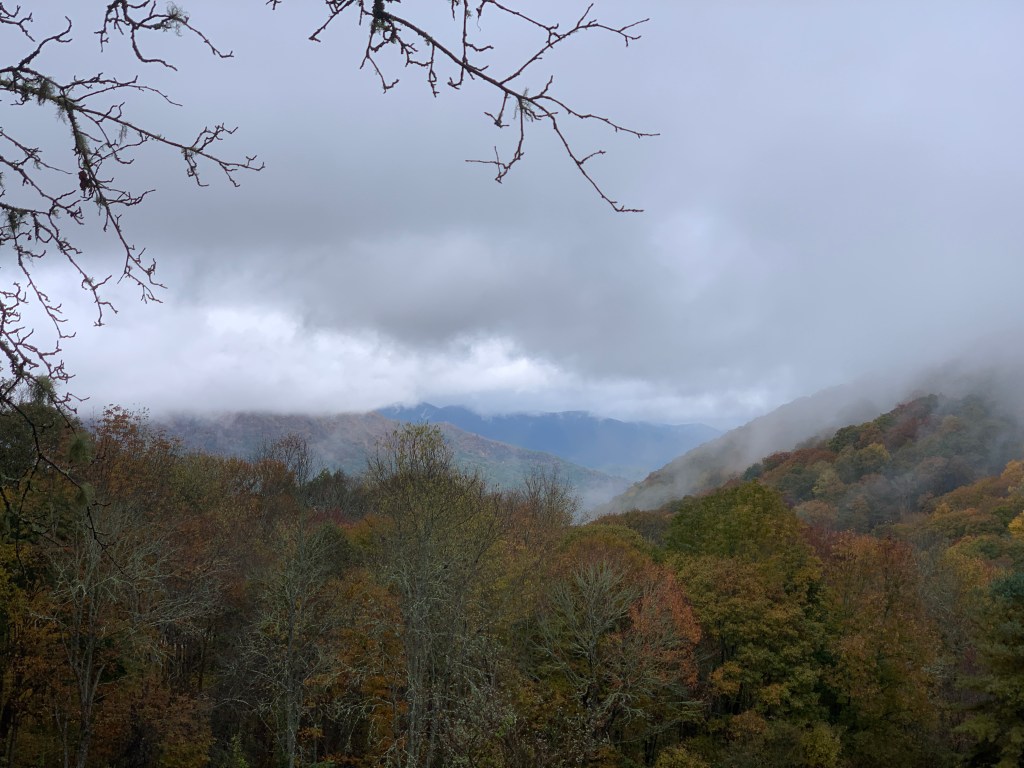
By far, the best features of our trip were the balds where we could see the Southern Appalachians in fall foliage. Stunning beautiful and a totally new thing for my friend who lived his entire life in Texas and Arizona. In reality even his prior experiences of fog were limited. He loved it all and I, despite now living in Arizona for 16 years, felt entirely at home in the Eastern Forest. I am a native of Pennsylvania.
Looking west toward Tennessee on a moist morning. Fog or drizzle? It can be hard to tell.
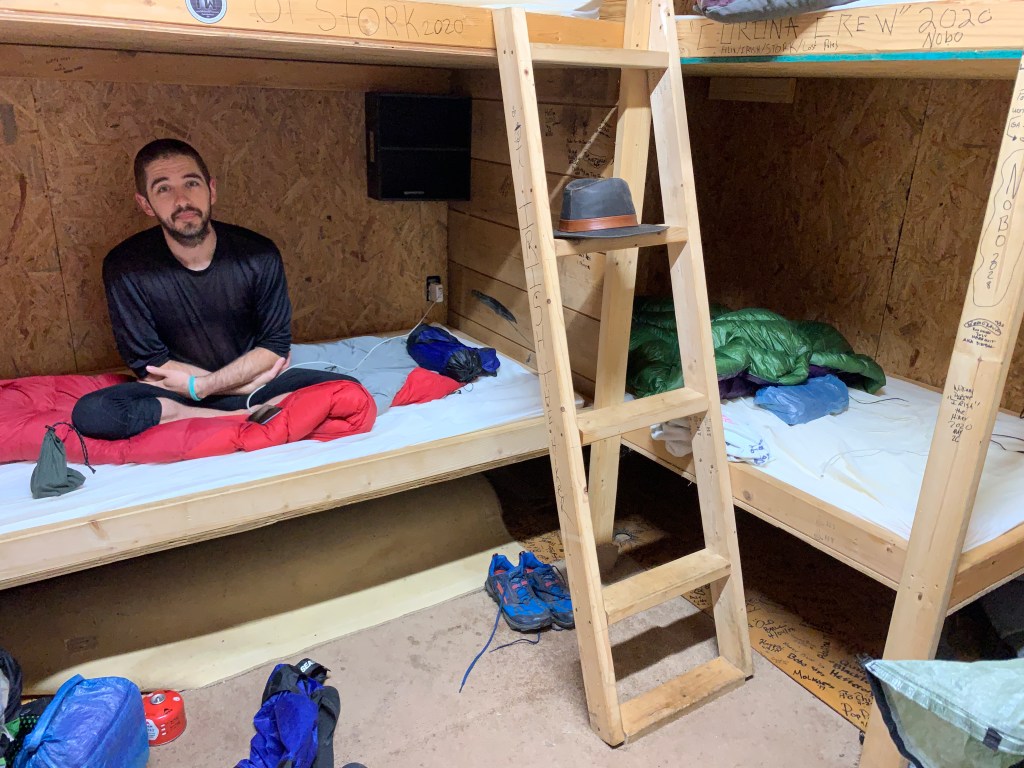
We stayed in 3 hostels – Laurel Road owned by Timmy Two Toke, Uncle Johnny’s in Erwin, and The Station at 19E in Roan Mountain, TN. The people at Station at 19E are totally about the hiker. They are super nice. The same can be said of Uncle Johnny’s. Timmy Two Toake’s was, well, colorful with signs like “trespassers will be shy and survivors will be shot twice.” For me, I thought that Timmy was very friendly and had a well stocked kitchen that, like most hostels, worked on the honor system. It was a very basic AT hostel at a very reasonable price.
We had the bunk room to ourselves at Laurel Road where we OD’d on frozen pizza and generic coke.
Our trip was a big success. Loren had some knee issues but we went slowly and took an extra zero or two. I discovered that adding Slap Yo Mama Cajun spices to most anything made it better. I reignited my love for Top Ramen, Pop Tarts, and reverted to my morning ritual of downing rocket fuel (2 packs of Breakfast Essentials, formerly known as Carnation Instant Breakfast, plus two pack sets of Starbucks Via or the Dollar Store equivalent). I still love life on the trail and feel content and fully at home in a tent. Some part of me, deep in the core of every cell, thrives on the trail in a way it just can’t anywhere else. I was born for this. It brings me peace. Plus I get to wear stinky clothes for days in a row which pleases my inner teenager to no end.
Hiking El Camino in Spain had become popular, many would say too popular. I’d been told stories of miserable food, crowded guest houses, bedbugs, and, gross as this is, outbreaks of scabies. Now most of this was told to me by a woman from France who clearly had a dog in the El Camino de Compostello vs. Le Chemin de Compostelle fight. But I did have friends who complained of long dusty road walking in Spain and fairly boring food choices on a trip shortly before I started planning mine.
French food or possible scabies? I went with Le Chemin despite most sources saying the French trail is 30 to 50% more expensive than El Camino. They also said the French trail was considerably prettier with much better accommodations. I opted for good food and no parasites. It seemed worth the extra cash. Plus I’d save on the toxic lotions to rid myself of tunneling insects under my skin. What I did not know was that I’d have an encounter with a very different tunneling insects on Day 1 of my trip.
I did some web searches and started reading about what the French government terms GR65, a fairly dry bureaucratic term for a beautiful ancient hiking trail. France has GRs (grande randonnées) and PRs (petite randonnées) – long hiking trails and shorter hiking trails that crisscross the country. GR65 is the trail goes from Le Puy-en-Valey in the central mountains of France to the Spanish border where El Camino starts in France at Saint-Jean-Pied-de-Port.
Le Puy-en-Valey
Le Chemin de Compostelle, the GR65, is one of several medieval pilgrimage trails in France that lead to El Camino and the Cathedral of St. James on the Spanish coast. And, in reality, the path of GR65 extends northwest to Germany and The Netherlands. There is a similar trail that goes to Paris and one that goes along the Pyrenees Mountains along the southern border of France that connects to a trail in Italy. They are all Le Chemins de Compostelle. They all connect to El Camino. The government numbers help keep them straight.
Pilgrims in Europe seem to have been avid hikers, and I have to wonder if they were double dipping on earning religious merit while getting to be on the trail, away from medieval village life, much like we do today although without the UL gear, an AWOL Guide or Guthook, and a smartphone that we survive on. Hiking has always been an adventure away from the wearing routines of daily life.
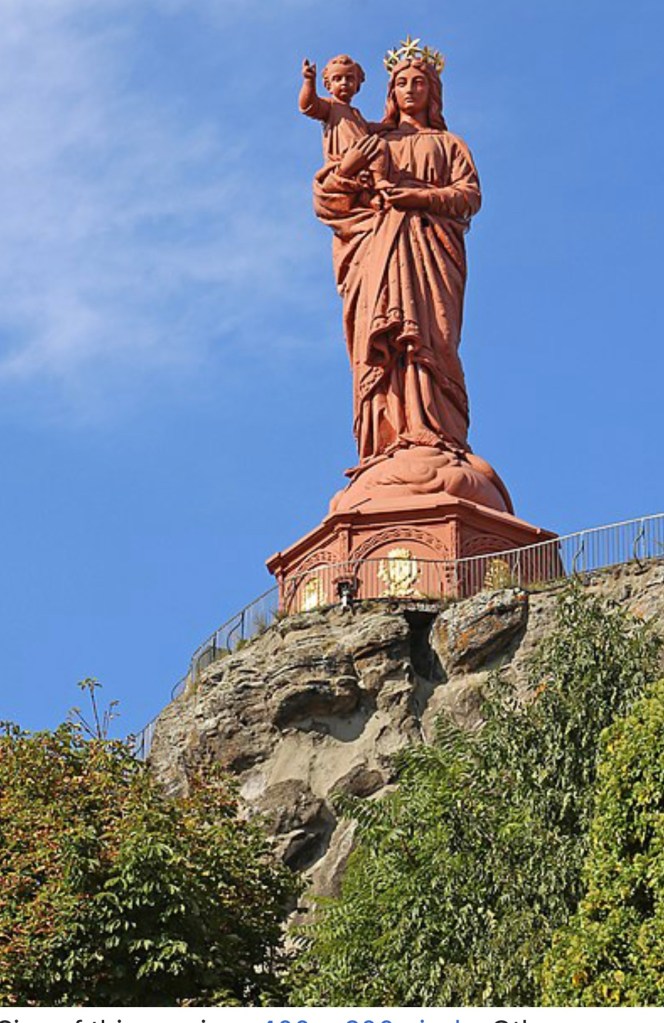
Although neither Catholic or religious, I made my way to the cathedral in Le Puy, a town famous for the extra good lentils they grow, I’m serious, and a giant imposing statue of the Virgin Mary on top of a big hill that dwarfs everything below, even more serious. The statue has a nice story. It is the melted remains of cannons from World War 1, a war that literally ripped Europe apart socially, politically, and financially. Nonetheless, the giant statue is not very attractive but is symbolically beautiful.
I got to Mass late and missed the distribution of the folder where you get stamps from towns and hostels and the blessing of the local bishop. This is kind of a must do for many, not all, hikers who start at Pe Puy. Hiking on Le Chemin is still serious business for the Church. The bishop blesses hikers every day. I was sad to have missed it although I have to admit the entire meaning of blessing people or things is a giant mystery to me.
I was fortunate to meet 2 very kind nuns who showed me around the cathedral and gave me “the credential” despite there being a rule that you must go to Mass to get one. Nuns tend to be renegades and these sisters were no exception. You use the credential to collect stamps and some guest houses give discounts for religious hikers. You turn it in in St. James Cathedral in Spain for some special blessing and an official pilgrim certificate.
Most hikers these days are hikers but there are still many religious pilgrims. Everyone gets along just fine although you are frequently asked about your status, hiker or pilgrim? It seems to be the icebreaker question. I was very much of the hiker category but stopped at many of the shrines and churches along the trail. Everyone does. Maybe we are all pilgrims or seekers of some type even if we don’t know it. Anyone who has spent 4 decades backpacking like I have is looking for something, right?
In 2016, a kid from New Jersey who was thru hiking the AT asked me what was so screwed up about me that I was attempting an AT thru hike. From a guy who looked to be 16 or 17, it felt it to be a profound question at the moment. It still does.
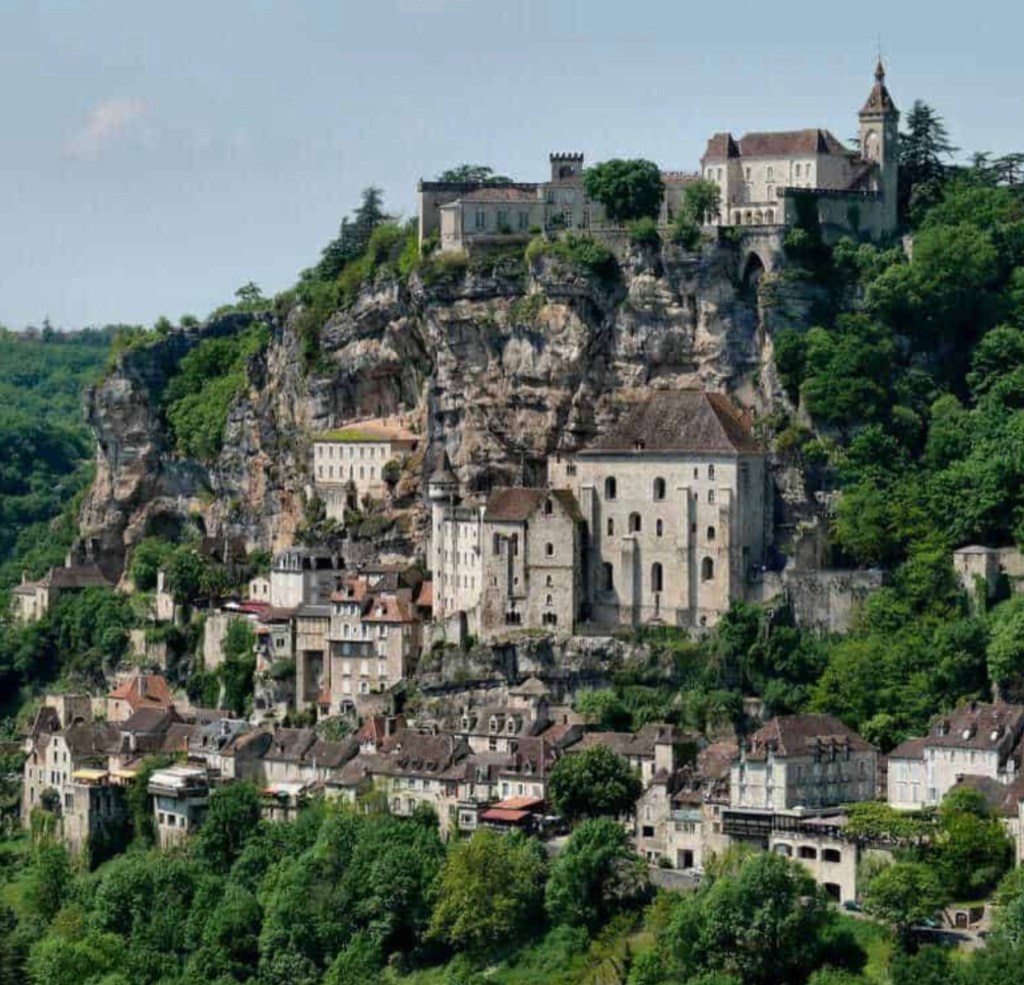
I hiked with my backpack for over 300 miles on GR65 and several side trails that went to other religious pilgrimage sites such as the Shrine of Our Lady of Rocamadour – a church at the the top of a village built into the side of a cliff (village perché). You climb hundreds of stone stairs to get there which was done on your knees back in the time of the plague even by 2 kings of France and a king of England. Many of the side trails were dozens of miles long. France is covered in well maintained hiking trails. Europeans love to hike.
Rocamadour with shrine at the top.
Rocamadour also has a great local goat cheese. France has more cheeses than days if the year and I’ve never met one I didn’t like.
Now hiking is hiking the world around. So there are many strangers meeting new friends and forming social networks and talk about other hiking trips and various orthopedic aches and pains. I developed a trail family for about 2 weeks. None of them spoke much English and my French is limited to about that of a 3 or 4 year old. Despite that, we had a blast together until the other 3 headed their separate ways and I continued to the southeast.
My French is functional. I can get a room or order food, no problem, but people seemed insistent that I discuss Trump. There are times when you are happy your communication skills are limited to essential topics and times when you just pretend you don’t understand.
There are limited camping locations on GR65. Some people kind of stealth camp but, being a visitor in France, I limited myself to legal campgrounds, typically in the middle of a village that forced me to worry about petty theft every time I left my camp. Most of the time, however, I stayed in gîtes (hostels but a lot nicer than most AT hostels) with real beds, showers for each room, and big communal dinners.
Miam Miam Dodo roughly translates to ‘yum yum sleepy time’ and is very much baby talk. It is the best guide but only comes in a French language version where everything is abbreviated much like the AWOL guide. It was a steep and painful learning curve but it is an excellent guide.
My husband is from France and I’ve learned over the past 25 years to love French food. Their food really is just amazing, even bar food. Typically it isn’t too expensive unlike the cost of French food in the USA. My dinners were at the hostels and lunch was usually cheese or French salami and baguette that I would buy in some village. Life on the GR65 is pretty great!
There are exceptions to all rules, however.
Day 1 of my trip ended at an especially fancy hostel. My private room had a beautiful view of farms and mountains. The room was actually too elegant for me. Dinner was excellent – beef burgundy and a nice salad with unlimited French bread. The French serve cheese after the meal. As I finished my dinner devouring the last of my cheese and baguette, the owner came out to explain the local cuisine. I missed much of what she was saying. It was sort of advanced descriptions of cooking and food. Sitting next to me was a nice German woman who spoke perfect English and French. She gave me a summary of what she considered the key, and very nauseating, point about our meal. The cheese we just ate had microscopic insects in it. Tunneling cheese insects. Essentially cheese scabies, technically cheese mites. That cheese was the pride of the locals. I smiled and mumbled something about it being good, which it was. The German gave me a supportive smile and seemed as uncomfortable with eating live insects as I was. France can be more exotic than people give it credit for, but the cheese-bug combo was quite good.
I was 56 when I made my 2016 AT thru hike attempt. I had been legally married to my husband for 12 years, and we’d been together for 9 years before we jumped over the broom in Ottawa, Canada on July 2, 2004. I had been openly gay, at work and in life, since I was 18 or 19. I actually marched in most of the big LGBTQ rights marches in DC and was active in LBGTQ rights organizations and volunteered as a nurse practitioner in HIV clinics for years. I felt I was very comfortable with being who I was. Just ask me and I would tell you so.
Well, there is one point there that I had not considered. It is easy to be out to my extended family that tends to be liberal to very liberal to extremely liberal. It is easy to be out when you live in the middle of a liberal coastal city like DC or even a big city like Phoenix that is embedded deeply in a fairly red state. What I had not considered was how easy or not easy was it to be out to a group of people, in the middle of the forest, who I had just met and, at least to my judgement, seemed 100% heterosexual.
The AT thru hiking community is heavily testosterone driven to say the least.
I kind of froze for a few days in my own fear of being out and hating that I was afraid and hating that I was talking around my marriage, husband, and my life. It was not so much that I wanted to scream ‘I’m gay’ as I wanted to be honest about myself as doing less is just being a liar.
On about Day 3, I was setting up my tent when one of my new friends, Dude Man, came and whispered to me, “Wazo, a few of us are going to leave about midnight, cross Blood Mountain, and go to Mountain Crossing at Neel Gap. Why don’t you come with us?” First, I have to admit that I was feeling very honored to be invited by the guys who were clearly the cool kids in our portion of the early bubble to skip camp in middle of a vety cold night to get away from an annoying hiker (yes, there are a few here and there but not many at all). They, the cool kids, were in their 20s and I was in my 50s, and on the nerd scale, I was doing better than most. My response, and I remember it like it was 5 minutes ago was, “hell yeah, I’ll go!”
At some point well after hiker midnight, Dude Man came and quietly got me up. We got our stuff packed, slipped out of camp, and headed north. We arrived at the top of Blood Mountain just as the sun was coming up. It was a great moment, one that I will never forget.
Sunrise from Blood Mountain, Feb. 2016. Day 3/4.
Before we got to the top of Blood Mountain, I figured I had to be open about who I was. Oddly, it really made me nervous. All that marching and volunteering and Gay Pride Day going, seemed to fade into a neurotic bowl of quivering jello. So, I bit the bullet and told them. The first response was one of the guys saying, “My father-in-law is gay and we spend just about every weekend with him and his partner.” I was so nervous that I could not connect the gay with the father-in-law and had to ask him to explain. By the time he was done, I was laughing at myself and felt that I was now one of the cool kids on the AT. On that trip that unfortunately ended just under 500 miles due to an injury, I learned that the thru hiking community was about as much a live and let live group of people I’d ever met. It is a beautiful social norm on the trail.
Our little group grew by quite a few more people. Some where long section hikers but most were thru hikers. Here is the statistical smashing fact. Of my tramily, I was the only member who did not make it to make to Maine. One guy,who started out as a section hiker transformed into a thru hiker after a long and very difficult weekend in Gatlinburg with his wife. My tramily rocked.
I am convinced that who you hang out with, cool kids or not, has a big impact on your likelihood of getting to Katahdin. Your tramily is, well, your family on the trail and, like it or not, we are to some degree the product of our families.
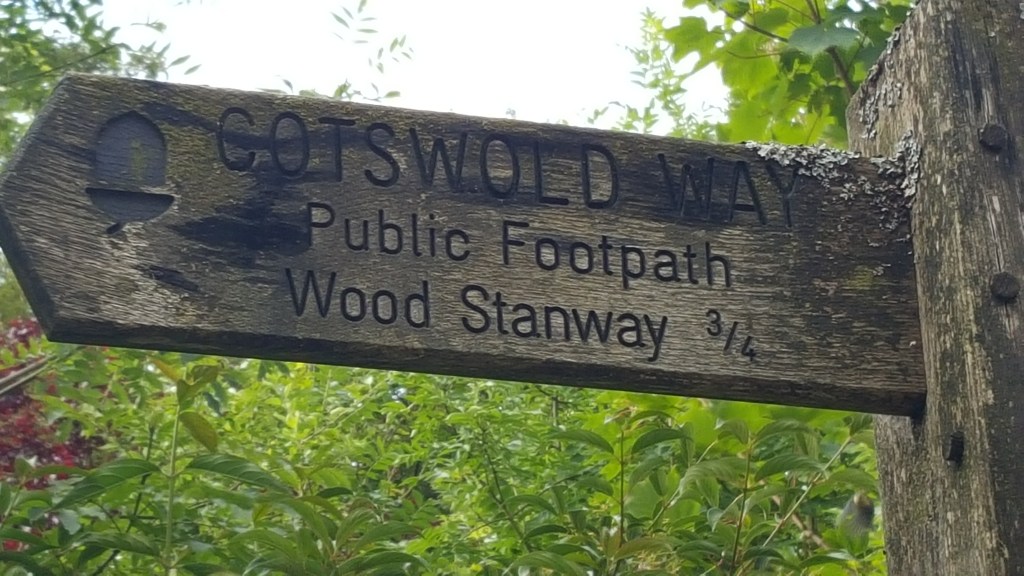
The Cotswold Way is a beautiful 100 mile trail that passes through breathtakingly beautiful English countryside.
The husband (AKA Eric) and I went to the UK for our niece’s wedding. She is an interesting musician type, who, at that time, lived on a longboat (also known as a canal boat) that is 75 feet long with 7 foot interior width. She lived on this pencil-like boat with her soon-to-be husband and their two Lurcher dogs. I don’t think we have this breed (?) in the USA. They are essentially greyhound mixes, I think, that are large, extremely muscular, fast, and not particularly friendly. When I said big, I mean like German Shepard sized but rather than a fluffy coat, they have short tight hair that shows off their very overly muscled bodies. Imagine Rocky Balboa or Arnold Schwartzenegger as a dog covered in half inch hair – canine terminators.
So living on what essentially is a hallway divided into tiny rooms, the four of them bunched together in the living room, think 7 X 8, on a small padded bench – kind of a 2X4 creation with paisley covered padding and a variety of pillows, kind of what you’d expect to see at an AT hostel. Plus, being in the UK, Birmingham to be exact, they had a tiny coal stove, tiny to the point that a thru hiker would call it a UL stove, that is used to warmup the interior of the longboat. Even in the summer, it was cold, dark, and damp. I did not see how it could possibly be warm in the bedrooms.
We were excited for the wedding and thought that we’d double dip on our trip to the UK by doing a hiking trip on the Cotswold Way, a hiking trail of just over 100 miles that goes through one of the most beautiful English regions that sports some spectacular golden limestone houses, a few giant manor houses, and the Cotswold Way. We quickly learned that almost all of the houses had been bought up by wealthy Londoners, bankers and CEO types.
If you are thinking of simple little homes, think again. This is historically one of the UK’s most wealthy areas going back centuries. Today many of the homes serve as second or third or whatever number of houses the very rich need. The houses are renovated to beyond their former glory – the yellow oolitic Jurassic limestone power washed and repointed, the gardens amazingly tended to, and everything in full British tiptop shape.
It almost felt like Disney has designed it, it was so perfectly perfect, perhaps a bit too much, but beautiful, quaint, and charming.
So here is the funny part. Due to some loophole in the law, if these houses are used for commerce, apparently to any degree more or less, they get a tax break or some reduced mortgage rate or something. The soon-to-be nephew explained it all to me which I promptly forgot. So, in this land of the newly and untitled rich, much more Mr. and Ms. than Lord and Lady, there is basically a battle (not) royal between houses on who can host the best B&B. Often there is one room or maybe two for guests that they fill with hikers a few days a month or whatever meets the requirement. The breakfast parts of the B&Bs were amazing – fresh pastries, French press coffee, tea, jams, jellies, eggs cooked to order, and often a small sack to take for lunch. The rooms were often filled with antiques.
Wait, we are hiker trash who arrive stinking like you do after a day of hiking, staying in luxury for very little money. I am liking this.
I asked one woman how many hours were spent maintaining her garden. Well, the Swedish woman comes 3 days a week to tend to the annuals and perennials, the Polish man comes 2, or 3, days a week for the shrubs and trees, and she, herself, puts in about 8 to 10 hours a week or at least she claims she does. “So it is basically a full-time job,” I asked. Actually it was close to 60 hours a week she informed me with a slight bit of irritation. I was not sure if she was annoyed by my brash American lack of manners to ask about work and the help or if she was insulted by my underestimation of how much time it took to maintain the various white, red, purple, and pink flowerbeds and the various shrubs and flowering trees that all were perfect, without a leaf out of place. Even the rumpled English style flowerbeds were perfect in their very well planned disorganization.
So, this was supposed to be about the Cotswold Way, not the B&Bs that I could not help but constantly compare to the Appalachian Trail shelters, my Big Agnes tent, and AT hostels I had stayed in . Needless to say the Cotswold inns were, to go local, posh, while the AT hostels are, well, rustic but, honestly, much more comfortable at least from an emotional aspect. With that said, nobody ever picked me up to shuttle me to a hostel in a Bentley, and I could see myself growing fond of this treatment that was actually at a bargain price (I thinking major tax write offs here).
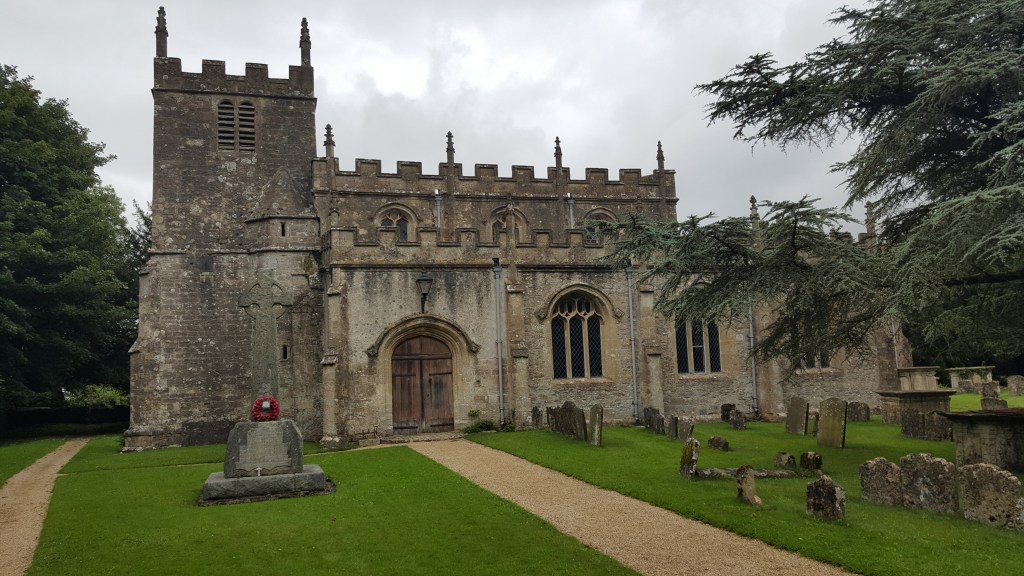
The Cotswold Way is 101.9 miles although you’ll do a lot more walking as your explore the villages, stop for food at a pub, and explore the Cotswold region. The trail is essentially flat or mildly rolling hills so not very challenging but very pleasant. The countryside is beautiful farmland and dotted with small villages that seem to be more 17th Century than 21st Century. We actually planned our trip to last 10 days to enjoy the historic sites and villages along the way. If I had to do it over, I might have planned for 7 or 8 days as one medieval village with a disproportionally large church in the center quickly blends into the next. In a nation that has one of the lowest church attendance rates on Earth, I wondered who pays to maintain all these aging churches, some pushing 1000 years, until I started to notice the very sad state of disrepair many of them are in.
A Norman style church along the Cotswold Way.
If I had to do it over, I would have visited more pubs and less churches. The locals, often not the same as the moneyed B&B/estate owners, are very friendly and fun.
The hiking trail goes mainly next to or even through the middle of agricultural fields – wheat, oats, and sheep. Lots and lots and lots of sheep which is what made this such a rich area to begin with. The trail even crosses the Dyson estate of the vacuum cleaner and other expensive household appliances tycoon that made him one of the UK’s richest people. That estate is hundreds or even a thousand acres of, yes, sheep and sheep and one giant house. Beyond verdant fields of grain and grazing pasture, you really do have the opportunity to see all the historic villages, churches, ancient burial mounds, and a lot more. Getting an English Heritage Pass will save you a lot of money. Carrying a clean pair of shoes will gain you entry once you’ve shown your pass.
The UK is not know for great weather but rather wet weather. So, theJuly wedding that prompted this trip mostly gave us good weather…warm, not hot, or what could be called idel most days. The Brits probably thought it was hot but when you are from Arizona, you define hot in a very different way than they do. So the weather was really pleasant until the temperatures dropped about 20 degrees and the rain came down like The Flood. The cute indentations that were the trail going through farms turned into an inch of water covering a few inches of mud. Our shoes and pants were covered in mud and we were stinky from wearing rain coasts. The wind made the rain an almost horizontal affair. We we soaked head to toe and hungry.
Sunday roast is an English tradition. You go to the pub and eat really really well done roast beef and potatoes all covered with very gelatinous brownish gravy. It all tends to be very bland and grey and, as mentioned, gelatinous. Well, after a full morning of slugging through the mud, we pulled into town soaking wet and stinking like backpackers who had been wearing GoreTex jackets all day. We went to a pub and asked if they had food. So, when people tell you the Brits are cold or unfriendly, remember this. The very kind lady let us into the pub despite our odor, our muddy boots, and our dripping clothes and packs, rearranged the reservations and table assignments and gave us the best she coudl do – 45 minutes to order, eat, pay, and leave. I wanted to hug her.
We feasted on the greatest meal ever – traditional British Sunday roast.
On February 28, 2016, I nervously finished my breakfast at the Hiker Hostel along with about 20 other people. I was about to start a NOBO hike of the Appalachian Trail. I’d spent months and months neurotically planning, buying equipment, returning equipment, rebuying the originals, and the even returning some of it.
The people at customer service at the Paradise Valley REI were patiently dealing with me, but I knew I was at about their limit. Amazon started charging me for returns. Honestly. I was literally trading excellent for excellent. In reality, the choices of backpacking gear available now compared to 1985 when I started backpacking are amazing.
So, I had arrived at Hiker Hostel the day after flying into Hartsfield-Jackson Atlanta International Airport, taking the the MARTA to the last stop, North Spring Station, and then getting a shuttle to Dahlinega, close to Springer Mountain, the southern terminus of the AT. While waiting for the shuttle, I met Jeffrey (soon to be JFree) and his dog, Pi which is the shortened version, everyday nickname, of Pi’s official name, Maple Apple Pi although I wouldn’t bet my life on that order being right. Maybe it was Apple Maple Pi. Not really sure as we’d all become fast friends and Pi was adequate. As we limbered along to the Hiker Hostel, we all nervously chattered about backpacking gear and how much or how little experience we had on the trail.
We were all nervous except for Pi.
Breakfast at the Hiker Hostel had been a beautiful selection of Southern cuisine – bacon, sausage, eggs, biscuits and gravy, and a giant bowl of grits. Everyone was still nervously chattering away, continuing the evening before’s discussion of gear and gear and weight of gear. One person, Baby Chick from Maryland, seemed to have missed the memo and arrived with a full set of Walmart camping gear. She sat in amazement as people argued the finer points of ULA vs. ZPacks, Osprey vs. Gossamer Gear, and Big Agnes vs. anything since the BA Fly Creek 2 was the tent of choice for almost 1/3 of those nervously chattering away. I felt good since my tent was the BA – essentially the “It Tent” of 2016. My Merrill Moab Ventilators also left me feeling quite prepared as they were a popular shoe choice. No boots for me, thank you. I’d read and read and read every AT blog, dived into every AT book, and watched hours and hours of Shitfoot and other AT vloggers. I read Appalachian Trials, AWOL (the book and the guide), Bill Bryson’s book, and about a dozen more. I was prepared as I could be and all the endless chattering and my very self-satisfied chattering left me feeling that I was ready to go with all the right gear.
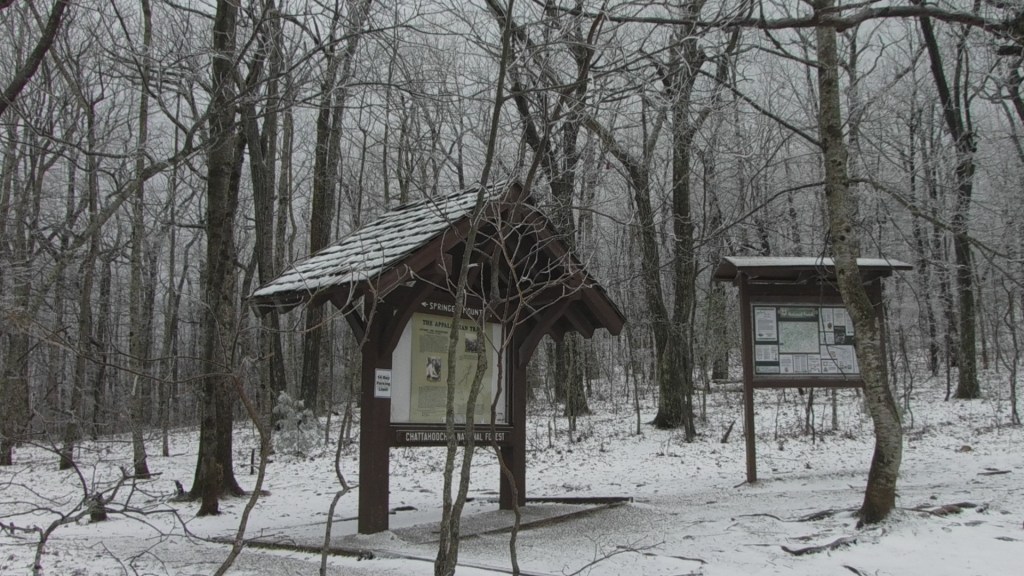
Then, as I was downing my grits and second cup of coffee, I looked out the window, and holy shit, it was snowing. The breakfast chattering came to an abrupt end. In very short time, we’d load in the van and head to the trail about a mile north of Springer and the southern terminus.
Breakfast at the Hiker Hostel
The ride in the van was silent except for some guy who had never backpacked and had already devised a 3-year plan to hike the big 3 and be a triple crowner. I never saw him after we got dropped off, in the snow, and me wondering why I thought it was so vital to avoid the dreaded bubble. Maybe he just headed straight north as he clearly has an agenda to complete. He had a cowboy hat which seemed wildly unsuited for the current conditions.
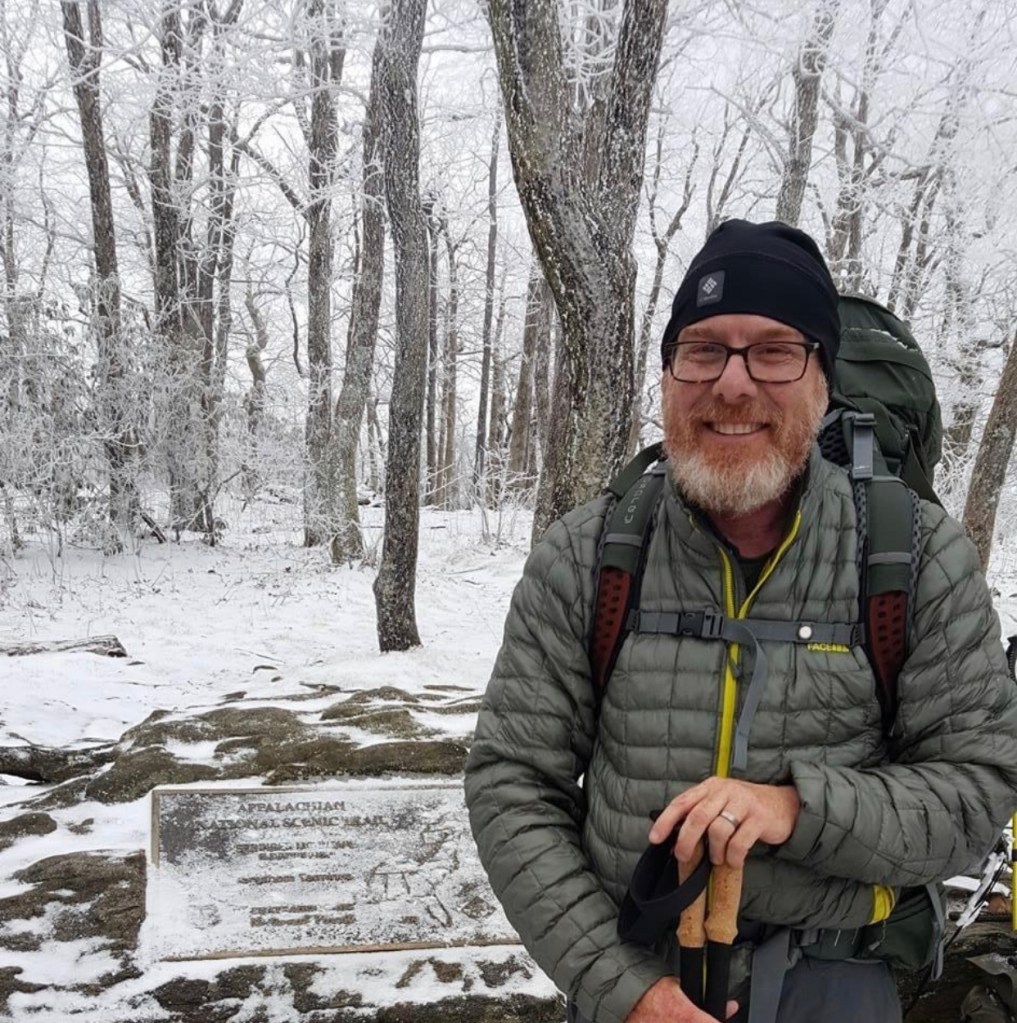
I, along with my van mates, headed south towards Springer and southern terminus monument. We all took turns posing for pics and selfies proudly and then headed north. To Maine.
Drop off point north of Springer
Within 15 minutes of the official start of my official NOBO AT thru hike, I tripped on a root (can any AT hiker not relate?) and, after some very awkward twisting and contorting, landed flat on my ass. Little did I know that was one of many falls on my 2016 attempt at a thru hike.
Falling, despite all the right gear, is humbling, very humbling when you are just steps north of the southern terminus monument.
Although I did a little less than 500 miles on that attempt, 484 miles I think is what I did, it was some of the best times of my life. I met some of the best people I’ve ever met, slept in some of the biggest dives I’ve ever seen, met Ron Haven (Budget Inns), and learned to be somewhat decent at the dreaded backpacking skill of hanging bear bags.






 Tripping Along The Trail